Delhi, Delhi
A Baha'i House of Worship known for its distinctive lotus-flower-shaped architecture, open to people of all faiths.
A large Hindu temple complex known for its intricate architecture, exhibitions, and evening musical fountain show.
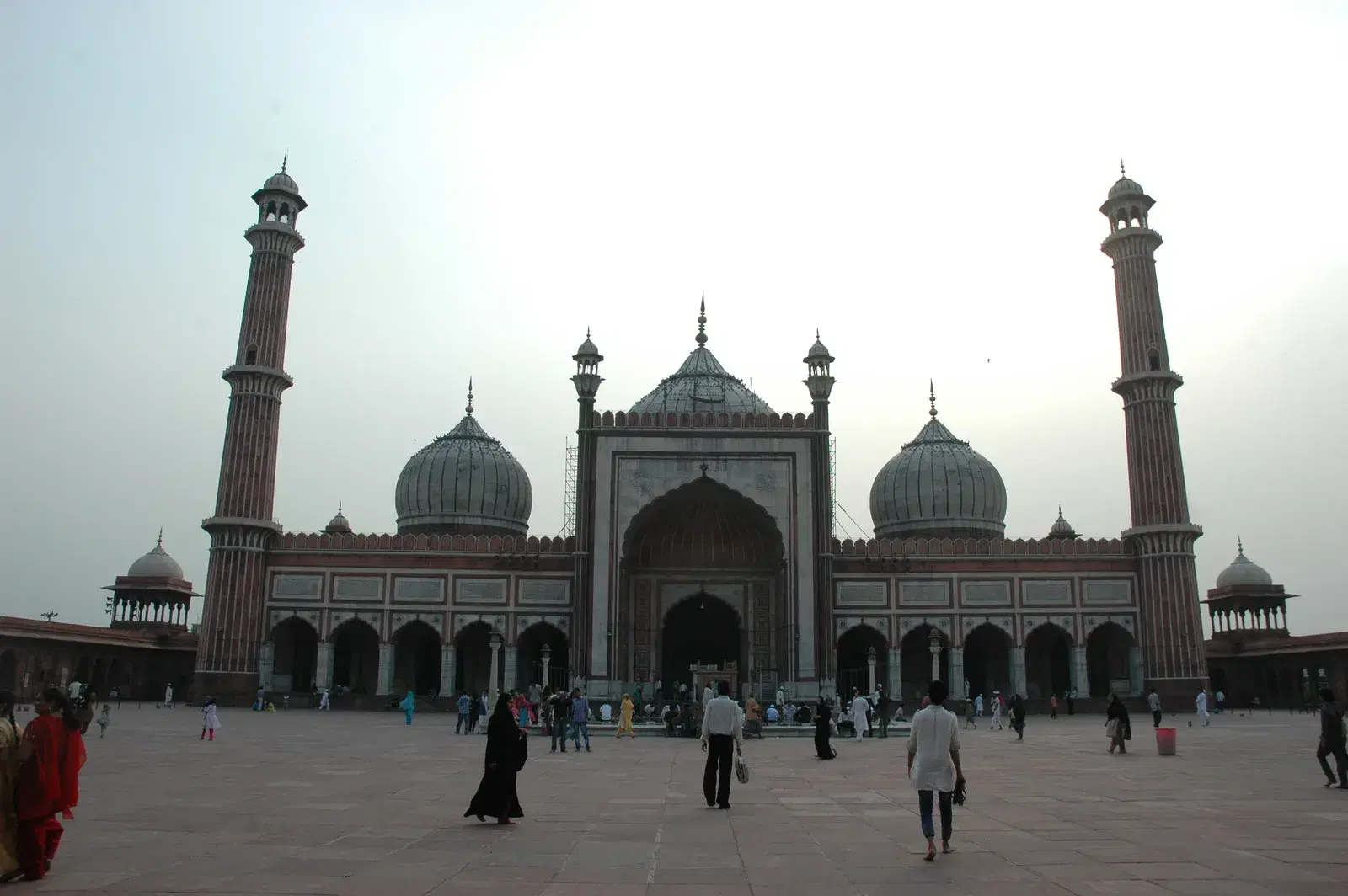
Constructed between 1644 and 1656 by Emperor Shah Jahan, the Masjid-i-Jehan-Numa, widely known as Jama Masjid, ranks among India's largest mosques. Inaugurated by Syed Abdul Ghafoor Shah Bukhari in Shahjahanabad, it functioned as the official imperial mosque until the Mughal realm collapsed in 1857. Beyond standing as an emblem of Mughal supremacy, it maintained political prominence during the British colonial era. Classified as a Monument of National Importance, the site continues active religious functions in Old Delhi.